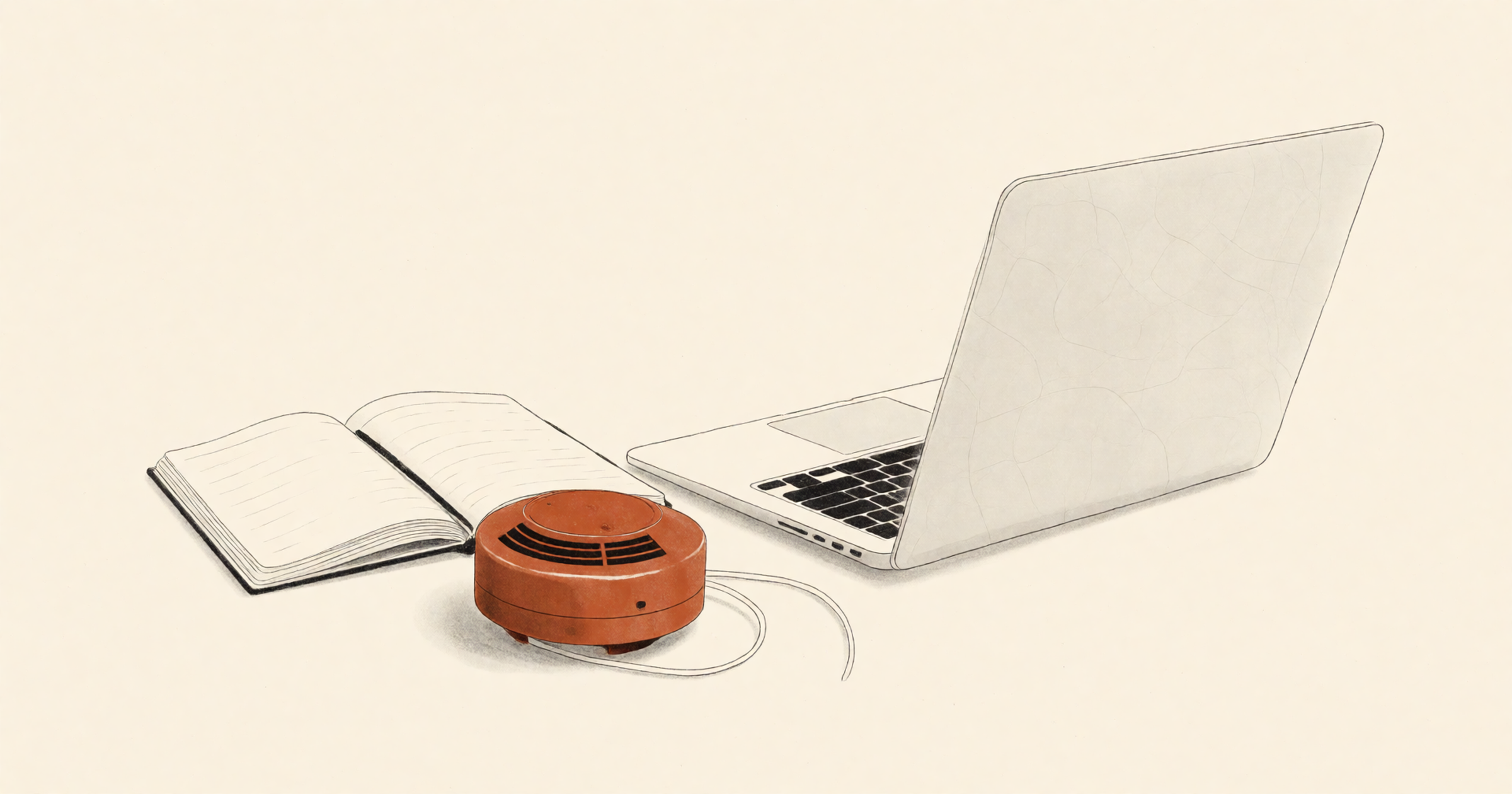
Back in June 2025 I wrote a post about AI in graduate education where I grumbled (a little) about universities scrambling to install AI detection tools. Last week AFP ran a piece with the headline “Grappling with ‘homework scams,’ US universities shun AI detectors,” so I suppose this is the part where I say I told you so.
I’m not going to say that. Kinda.
The Reality
A lot of schools have stopped trusting the tools. Yale, Vanderbilt, Johns Hopkins, and Indiana have banned or discouraged using detectors as the sole evidence of cheating, and at least a dozen universities (Northwestern, Georgetown and NYU among them) have switched off Turnitin’s AI detection entirely, according to Inside Higher Ed. The AFP piece adds Cornell to the list, and quotes Harvard College’s dean, David Deming, “We would all benefit from getting out of the AI-detection business.”
Obvious reasons are obvious: false positives, bias against non-native English writers, and “humanizer” tools that rewrite AI text until the detector waves it through.
The Security Person’s Take
Humanizers make me smile, because they’re the oldest story in my field. You build a detector. Someone builds a way around the detector. You update the detector, they update the workaround. Antivirus has been living this loop since the ’90s, spam filters too. Yale’s Poorvu Center put it nicely in the IHE piece, “This becomes a technical exercise rather than a learning event.” In security we’d just call it an arms race, and the side that only has to change its own output (without asking anyone’s permission) usually wins.
The second lesson here (and the bigger one, I think) is that we’ve spent decades learning that a high false-positive rate wastes analysts’ time and, worse, teaches everyone to stop trusting the alerts. When the consequence is an academic misconduct case, a detector that’s wrong some of the time is a serious problem, because the “alert” falls on a student. Some of those students have sued.
So What Replaces Them?
“Stop using detectors” isn’t a plan. The coverage points toward supervision (blue books, oral exams, proctored and distraction-free assessments) or toward visibility, meaning assignments where students document how they used AI, show their process, and explain their reasoning (UCF’s Kevin Yee is in that camp). Indiana’s Kelley School playbook, which centers process and reasoning, leans the second way too, and it’s pretty much what I was arguing for last year.
I don’t think the first one is wrong, exactly. An oral exam is a lovely thing (and some of my favorite conversations with students have happened in them). But if supervision is the whole answer, we’ve just moved the detector from software into the room, and we’re still asking, “Did you use it?” when the more useful question is, “How did you use it, and did it help you think?”
In my own classes, when I give students explicit permission to use AI with the caveat that they interrogate and share their interactions, students tend to find it revelatory and not what they expected. In my research when I ask students to further interrogate their own engagement, what they did and what they recall doing tend to be very different things. That realization is worth its weight in gold.
For example, a student might think they’re taking a contrary or critical position against an AI, but a review of their actual interactions shows more passive agreement than anything. So, if we’re asking students to be critical of an AI’s output, it seems as though they believe they are even when they aren’t.
Good Riddance
I’m glad the detectors are going. If I’m worried about anything, it’s that what comes next is just a more expensive version of the same instinct. The schools that’ll do this well are the ones that treat AI use as something to teach, make visible, and negotiate with.
Reuse
Citation
@misc{straight2026,
  author = {Straight, Ryan},
  title = {So the {Detectors} {Are} {Out}},
  date = {2026-10-16},
  url = {https://ryanstraight.com/posts/2026-10-13-detectors-out/},
  langid = {en}
}